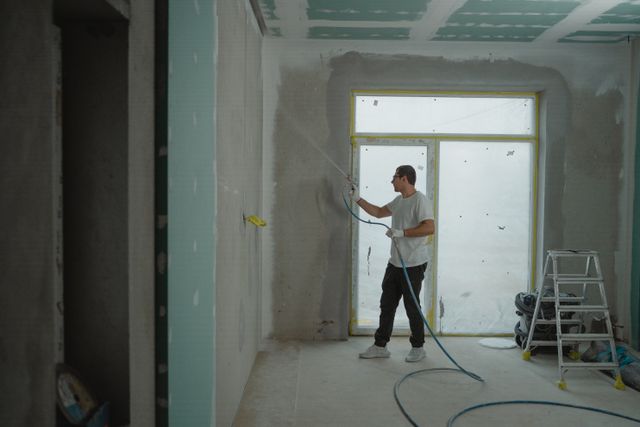
Convenience has become an important part of how people evaluate almost every service they use. Retail has helped shape these expectations by making it easier for customers to research options, compare choices, receive updates, make payments, and get support without unnecessary delays. Those expectations do not disappear when someone needs a home painted or a commercial property refreshed.
Painting is still a hands-on service that requires skilled preparation and work at the property, but many parts of the customer experience can become easier. From requesting an estimate and selecting a suitable schedule to receiving project updates and making final payments, residential and commercial painting businesses can borrow practical ideas from modern retail. The goal is not to turn painting into a simple off-the-shelf purchase. It is to remove avoidable friction around the service so customers can make informed decisions and manage their projects with greater confidence.
Why Convenience Matters in Professional Painting Services
Customers rarely judge a painting company only by the finished walls. Their experience begins much earlier, often with an online search, a phone call, an estimate request, or a question about availability. Every additional step between that first interaction and the completed project can influence how easy the company is to work with.
Residential customers may already be balancing work, family responsibilities, repairs, and other household projects. Commercial customers can face even more scheduling pressure because painting may need to happen around employees, tenants, customers, deliveries, or operating hours.
Retail businesses have spent years reducing these types of barriers. Customers have become accustomed to finding information quickly, completing straightforward transactions, and knowing what happens next. Painting contractors can apply the same principle without making the service impersonal.
Convenience in this setting means reducing uncertainty. Customers should understand how to request service, when they can expect a response, what the project involves, and what steps come next.
Making the Initial Search and Inquiry Easier
One lesson painting companies can take from retail is the importance of making information accessible before a customer has to speak with someone. People often want to conduct basic research independently before requesting an estimate.
A painting website can help by clearly separating residential and commercial services and explaining the types of projects the company handles. Potential clients should not need to search through several pages just to determine whether a contractor paints interiors, exteriors, offices, rental properties, or other spaces.
Useful information can also address common concerns about preparation, project duration, occupied spaces, scheduling, and what happens during an estimate. The objective is not to provide a fixed answer for every project. Painting conditions vary too much for that. Instead, the website should help customers understand the process.
A straightforward inquiry system adds another layer of convenience. Customers can provide essential project details, preferred timing, and contact information without completing a lengthy form. Making this first step easier can turn casual research into a genuine project conversation.
Creating a More Transparent Estimate Process
Retail customers are accustomed to seeing clear information before making purchases. Painting projects cannot always offer instant pricing because labor, surface condition, square footage, preparation, accessibility, and other factors can change the cost considerably. However, the estimate process itself can still become more transparent.
Customers should understand what will happen during an estimate and what information is needed. Once the property has been assessed, the proposal can clearly explain the scope of work, preparation requirements, areas being painted, expected timeline, and other important conditions.
This is particularly important when clients are comparing several contractors. An unclear estimate forces the customer to guess what is included, while a well-organized proposal makes the differences easier to understand.
For commercial clients, clarity becomes even more important because multiple people may need to review the project. Property managers, business owners, facility teams, or other decision-makers should be able to understand the proposed work without repeatedly requesting clarification.
Retail-style convenience does not require simplifying a complex project. It means presenting complexity in a way that customers can understand.
Giving Customers More Control Over Scheduling
Scheduling is one of the biggest areas where painting businesses can improve convenience. Customers want to know not only when work can begin but also how the project will affect their normal routines.
Residential clients may need to plan around children, pets, remote work, furniture movement, or other household responsibilities. Commercial clients may need painting completed outside operating hours or divided into phases so certain areas remain available.
A more customer-friendly scheduling process can provide realistic windows rather than leaving clients uncertain about when work will happen. Confirmation messages and reminders can also reduce confusion as the project date approaches.
If the schedule changes because of weather or another unavoidable issue, prompt communication matters. Customers are generally better able to adjust when they receive useful information early.
Giving customers reasonable scheduling choices creates a sense of control. It reflects one of the strongest elements of retail convenience: allowing people to interact with a service in a way that better fits their own time.
Simplifying Choices Without Removing Personal Guidance
Painting projects can involve many decisions. Customers may need to consider colors, finishes, room combinations, exterior areas, surface repairs, and the order in which different spaces will be completed.
Too many choices without guidance can quickly become overwhelming.
Retailers often solve this problem by organizing choices into understandable categories. Painting contractors can use a similar approach. Instead of presenting every possible option at once, they can guide customers through decisions based on the property, intended use of the space, existing surface condition, and maintenance expectations.

Professional guidance remains important. A contractor can explain why certain approaches may be better suited to high-traffic areas or why an exterior surface requires additional preparation.
The goal is to help customers make decisions efficiently while still giving them appropriate control over the finished project. A convenient experience does not eliminate expert advice; it makes that advice easier to understand and act upon.
Keeping Clients Informed While Work Is Underway
One of the most frustrating parts of any property service is not knowing what is happening. Customers may understand the overall project schedule but still have questions once work begins.
Regular communication can make the experience significantly easier. A brief update can explain what has been completed, what is happening next, and whether anything has affected the original timeline.
For smaller residential projects, updates may happen through direct conversation. Larger commercial projects may benefit from more structured progress communication, especially when the person overseeing the project is not always on site.
This resembles the visibility customers have come to expect from retail transactions. People appreciate knowing the status of something they have paid for rather than having to repeatedly ask for information.
Painting businesses do not need to overwhelm customers with constant notifications. The aim is simply to provide useful updates at important stages so the client remains informed.
Bringing Greater Convenience to Commercial Painting Projects
Commercial painting introduces additional challenges because the work often needs to happen around active business operations. Offices, retail properties, rental buildings, and other commercial spaces may not be able to close completely while painting is underway.
Convenience therefore depends heavily on coordination.
A contractor may need to divide work into sections, schedule certain tasks outside busy hours, or coordinate access with property staff. Clear project planning can help reduce interruptions and make it easier for the client’s employees or tenants to continue using the building.
Documentation can also be organized so that decision-makers have easy access to estimates, schedules, approvals, and project updates.
For businesses managing multiple locations, consistency becomes another form of convenience. A familiar process makes future projects easier because the client already understands how estimates, scheduling, communication, and completion will be handled.
Making Payments and Project Completion Simpler
The final stages of a painting project should be as organized as the beginning. Customers should know when the project is considered complete, how final checks are handled, and what payment steps remain.
A clear completion process gives clients an opportunity to review the work and raise questions before everything is closed out. This is especially useful on larger properties where several rooms, floors, or exterior areas may have been painted.
Payment should also be straightforward. Customers benefit when they understand payment expectations from the beginning rather than discovering additional steps at the end.
Commercial clients may have their own invoicing or approval requirements, so flexibility in documentation can make the process easier for both parties.
A smooth closeout leaves a stronger final impression. Even when the physical painting work is excellent, a confusing invoice or unclear completion process can unnecessarily weaken the customer experience.
Using Follow-Up Service to Encourage Long-Term Relationships
Retail businesses understand that the relationship with a customer does not necessarily end after a transaction. Painting contractors can adopt the same thinking.
After a project is completed, a simple follow-up gives customers an opportunity to ask questions or provide feedback. Contractors can also keep accurate records of completed work, making future conversations easier if the client needs another area painted.
This is particularly useful for commercial properties where repainting may become part of ongoing maintenance. Residential customers may also return for additional rooms, exterior work, or projects at another property.
The key is to make future service easier, not to overwhelm previous customers with constant promotional communication. Maintaining useful project information and staying appropriately connected reduces the effort required when the customer is ready to return.
A client who already knows the process may be much easier to serve the second time.
Convenience Should Support Quality, Not Replace It
There is a limit to how closely professional painting should resemble retail. A painting project involves physical property, surface conditions, preparation requirements, and skilled labor. Some decisions require an on-site assessment and cannot responsibly be reduced to a few clicks.
The value of retail-style thinking lies in improving everything around that professional work.
Customers can have easier inquiries without sacrificing detailed estimates. Scheduling can become more flexible without rushing the project. Digital communication can provide convenience while still allowing clients to speak directly with someone when they have specific concerns.
This balance is important. Convenience should remove unnecessary effort, but it should never encourage shortcuts in preparation, workmanship, or communication.
The strongest customer experience combines an easy process with careful execution.
Bringing a More Customer-Friendly Approach to Painting
Residential and commercial painting services can learn a great deal from the way retail has improved customer convenience. People increasingly expect information to be accessible, communication to be timely, and routine steps to be simple.
Painting companies can respond by improving how customers request estimates, understand project details, choose schedules, receive updates, make payments, and arrange future work. None of these changes alter the core skill required to prepare and paint a property properly. They simply make it easier for customers to access that expertise.
For homeowners, that can mean less uncertainty and fewer interruptions during a project. For commercial clients, it can mean better coordination and a clearer process across larger or recurring jobs.
Ultimately, retail-style convenience in painting is not about making professional services feel like products on a shelf. It is about respecting the customer’s time. When skilled work is supported by clear information, flexible communication, and an organized service process, the entire painting experience becomes easier to manage.
Leave a Reply