
Modern retail has changed what people consider acceptable from software. Customers expect searches to return quickly, payments to process correctly, inventory information to be current, and digital services to remain available when demand rises. A small delay or incorrect piece of information can be enough to interrupt a purchase.
AI medical scribes operate in a far more sensitive environment, but software teams can still learn from these expectations. Clinicians using documentation technology need responsive systems, dependable integrations, and outputs that can be reviewed efficiently. For teams responsible for QA and testing of AI medical scribe platforms, speed, accuracy, and reliability need to be evaluated together. A fast system is not useful if its output is unreliable, while highly accurate functionality can still create workflow problems if clinicians spend too much time waiting for it.
Speed Is More Than a Fast Loading Screen
Retail software has made users sensitive to delays. Search results, carts, payments, and account pages are expected to respond without repeatedly interrupting the customer’s task.
The same basic expectation applies to clinical software, although the consequences of poor performance can be different.
AI medical scribe testing should examine the time required to process relevant inputs and produce usable outputs under realistic conditions. Testing should also consider whether performance changes during longer encounters, heavier workloads, or periods of concurrent use.
Average response time alone may hide problems.
A platform might perform quickly in most tests but occasionally experience severe delays. Those outliers can matter in real workflows.
Performance testing should therefore look at consistency as well as speed. Teams need to understand what happens during ordinary use and what happens when the system is under pressure.
The aim is not simply to achieve the lowest possible number on a performance chart. It is to make sure delays do not become an unnecessary obstacle to the intended clinical workflow.
Accuracy Has a Different Meaning in Clinical Documentation
Retail systems are expected to show the correct product, price, quantity, and order details.
When those elements are wrong, the customer experience breaks down.
Accuracy in an AI medical scribe is more complicated because the software may be processing speech and producing clinical documentation from an interaction.
Testing cannot stop at measuring whether spoken words were transcribed correctly.
Teams may also need to evaluate whether clinically relevant information is represented appropriately, whether speakers are attributed correctly, and whether the system introduces statements that were not supported by the source interaction.
Omissions deserve attention as well.
A note can look polished while leaving out information that was actually discussed.
Testing therefore needs criteria that reflect the intended purpose of the product rather than relying only on surface-level language quality.
A fluent note is not automatically an accurate note.
Reliability Means Consistent Behavior Across Different Conditions
Retail platforms are tested across browsers, devices, payment methods, traffic levels, and purchasing scenarios because customers rarely interact with them under one perfect condition.
AI medical scribe platforms also face variation.
Real clinical environments can involve different voices, speaking styles, background sounds, encounter lengths, terminology, interruptions, and communication patterns.
A system that performs well in a controlled demonstration may behave differently under these conditions.
QA teams should build testing scenarios that represent the environments in which the product is actually expected to operate.
That does not mean randomly adding noise or accents simply to make testing difficult.
Test conditions should have a clear relationship to intended use.
The objective is to identify where performance changes and whether those changes create unacceptable risks or workflow problems.
Reliable software should not depend on every real-world interaction resembling a carefully prepared demo.
Small Errors Can Accumulate Across a Workflow
Retail quality teams pay close attention to small defects because several minor problems can combine into a failed transaction.
A product page might load correctly, but an incorrect stock status followed by a checkout error can still lose the order.
AI medical scribe testing benefits from the same end-to-end thinking.
Speech processing may work correctly while information is transferred incorrectly to another part of the application. A generated note may appear acceptable but lose formatting during an integration step. An edit may display correctly to the user but fail to persist.
Testing individual components is necessary, but it does not prove that the complete workflow works.
End-to-end scenarios can follow information from the beginning of an encounter through processing, review, editing, transfer, and any other intended stages.
This helps teams find defects that exist between components rather than inside a single feature.
Integration Testing Deserves Retail-Level Attention
Modern retail platforms rarely operate alone.
Payments, inventory, shipping, customer accounts, fraud controls, and fulfillment systems exchange information continuously. An integration failure can interrupt the entire customer journey.
AI medical scribe platforms may also depend on multiple systems.
Depending on the product, integrations can affect authentication, data exchange, documentation workflows, or connections with electronic health record systems.
Testing should consider successful exchanges as well as failures.
What happens if an external system responds slowly? What if required data is missing? What if a connection fails after one part of a workflow has already completed?
These situations need predictable handling.
Users should not be left wondering whether information was saved, transmitted, or lost.
Quality teams should also verify that retry behavior does not create duplicate records or inconsistent states.
Integration reliability is often invisible when everything works. Its importance becomes obvious the moment something does not.
User Experience Testing Should Focus on Clinical Efficiency
Retail software removes unnecessary steps because every extra click can create friction between interest and purchase.
Clinical software should also avoid needless friction, but the goal is different.
An AI medical scribe should support clinicians rather than encourage them to accept information quickly without appropriate review.
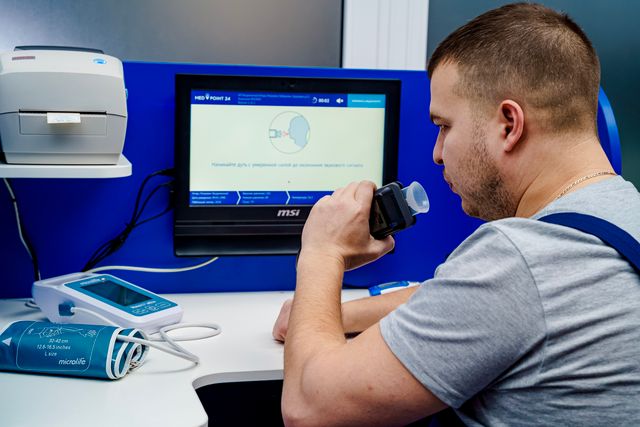
Usability testing can examine whether generated documentation is easy to review, whether uncertain or problematic information can be identified, and whether corrections can be made efficiently.
Navigation matters too.
Important controls should not be hidden behind confusing menus, and the interface should communicate system status clearly.
The fastest workflow is not automatically the best workflow.
Removing a review step merely to save time could create new risks.
Testing should therefore distinguish between unnecessary interaction and necessary oversight.
Good clinical usability makes appropriate actions easier without making important verification disappear.
High Demand Should Not Create Unpredictable Performance
Retail platforms prepare for seasonal peaks, product launches, and promotional events because demand can rise quickly.
Clinical software may experience its own periods of heavier usage.
Performance and load testing can help determine how an AI medical scribe behaves as concurrent activity increases.
Teams can examine processing times, resource consumption, failed requests, queues, and recovery behavior.
Testing should also consider what happens after the system reaches a limit.
Does it degrade gradually? Does it reject new requests clearly? Does it recover when demand decreases?
These questions matter because failure behavior is part of reliability.
A system that slows predictably and communicates its status may be easier to manage than one that appears normal before suddenly losing requests.
Capacity planning becomes stronger when it is based on measured behavior rather than assumptions.
Updates Should Not Quietly Reduce Quality
Retail applications change constantly. New features, integrations, pricing logic, and interface updates create a continuing need for regression testing.
AI medical scribe platforms can change for additional reasons.
Software components may be updated, integrations may change, and AI-related components may be adjusted in ways that affect output behavior.
A change that improves one measure could unintentionally reduce performance somewhere else.
Regression testing should therefore include representative workflows and output-quality evaluations.
Teams can maintain test sets covering common use cases, important edge cases, integration behavior, performance expectations, and known historical defects.
Results should be compared across versions.
The purpose is not to prevent change. It is to make changes visible.
When software behavior shifts, teams should be able to determine whether that difference is intended and acceptable rather than discovering it after deployment.
Error Recovery Is Part of Reliability
Retail systems have learned that customers care about what happens after something goes wrong.
A declined payment with a clear next step is frustrating but manageable. A checkout page that freezes without explaining whether the order was submitted creates much greater uncertainty.
Clinical software needs equally clear failure behavior.
If audio processing is interrupted, a connection is lost, or an integration becomes unavailable, the system should handle the situation according to its intended design.
Testing should verify recovery paths deliberately.
Can a workflow resume safely? Is the user told what happened? Is partially processed information handled correctly? Could retrying the action create duplicates?
Failure testing can feel less impressive than demonstrating a successful workflow, but it often reveals more about software reliability.
Quality is not demonstrated only when everything goes according to plan.
Security and Privacy Cannot Be Traded for Convenience
Retail platforms attempt to make checkout fast while still protecting payment and account information.
AI medical scribe platforms face their own security and privacy responsibilities, potentially involving sensitive health information.
Testing must therefore examine whether convenience features create inappropriate exposure.
Authentication, authorization, session behavior, data transmission, storage, logging, and integrations may all require evaluation based on the product’s architecture and applicable requirements.
Test environments also need appropriate controls.
Teams should not use sensitive real-world information casually simply because realistic data improves testing.
Privacy and security need to be considered in test-data design, environment access, defect reporting, screenshots, logs, and other QA activities.
A workflow is not genuinely efficient if achieving that speed requires weakening necessary protections.
Monitoring After Release Completes the Quality Loop
Retail software teams do not assume that passing pre-release tests means the application will behave perfectly forever.
Production conditions reveal combinations that controlled environments may not reproduce.
The same principle applies to AI medical scribes.
Appropriate post-release monitoring can help teams identify performance degradation, recurring failures, integration problems, or other changes requiring investigation.
Production observations can then improve future testing.
If a particular failure repeatedly appears in real use, a corresponding scenario can be added to regression testing. If certain conditions consistently produce slower processing, performance tests can be adjusted to represent them more accurately.
This creates a feedback loop between actual operation and QA.
Testing becomes stronger because it reflects what the software encounters rather than relying entirely on assumptions made before release.
Retail Speed Is Useful Only When Paired With Clinical Responsibility
Modern retail provides a useful benchmark for what well-engineered digital experiences can feel like. They respond quickly, preserve information across steps, handle large volumes of activity, communicate failures clearly, and try to remove unnecessary effort.
AI medical scribe platforms can benefit from many of the same engineering priorities.
The difference is that clinical documentation requires a much higher degree of care around output accuracy, privacy, workflow design, and appropriate human review.
Speed cannot compensate for incorrect documentation. A polished interface cannot compensate for unreliable integration behavior. High availability cannot compensate for a system that behaves unpredictably after updates.
That is why QA needs to examine these qualities together.
The strongest AI medical scribe testing programs do not simply ask whether the software works. They ask whether it remains responsive under realistic conditions, whether its outputs can be evaluated for accuracy, whether workflows behave consistently, whether failures are recoverable, and whether changes introduce unexpected problems.
Retail has raised expectations for digital speed and reliability. Clinical technology can learn from that standard without copying retail priorities blindly. For AI medical scribes, the real objective is software that feels efficient while still respecting the accuracy, oversight, security, and dependability expected from technology used in healthcare.
Leave a Reply