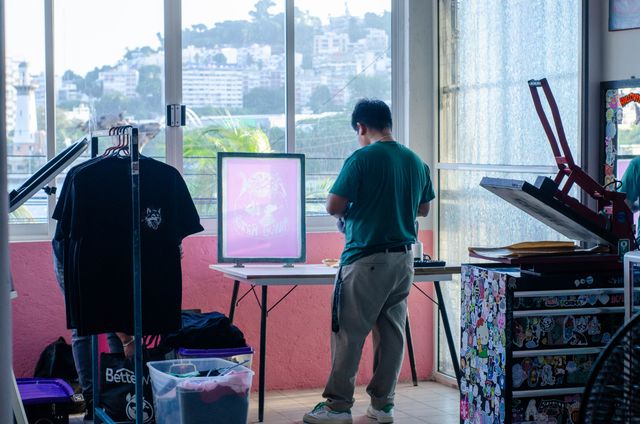
A custom-printed shirt may look like a straightforward retail product, but the inventory decisions behind it are anything but simple. Every design comes with a range of sizes, colors, fabric options, and potential customer preferences. A retailer might have enough shirts in total to meet expected demand while still losing sales because the most popular sizes are unavailable. At the same time, slower-moving sizes can accumulate in storage, tying up money that could have supported new designs or replenishment.
For businesses involved in custom shirt printing, inventory planning becomes a balancing act between product availability, personalization, production efficiency, and working capital. Unlike retailers selling standardized products, custom apparel businesses must consider both the garments they hold before printing and the finished products they expect customers to purchase. Understanding how these decisions connect is essential for reducing excess stock, avoiding missed orders, and building a retail operation that can respond to changing demand.
Why Size Availability Matters More Than Total Shirt Inventory
Retail inventory is often evaluated by counting the number of units available. For custom shirt printing businesses, however, the total quantity can be misleading because customers generally cannot substitute one clothing size for another.
A retailer may have hundreds of blank shirts ready for printing, but that inventory offers limited value if customers are consistently requesting sizes that are out of stock. Having excess small shirts does not solve a shortage of large or extra-large garments. The business may appear well stocked in its inventory records while still experiencing lost sales.
This is known as a size availability problem, and it affects both finished apparel and blank garments awaiting customization. A single missing size can prevent a retailer from completing an order, particularly when a customer requests matching shirts for an entire group.
Retailers need to evaluate inventory at the size and color level rather than relying exclusively on total unit counts. Monitoring which combinations sell quickly, which remain in stock, and which regularly cause order delays provides a more accurate picture of inventory performance.
Every Design Creates Multiple Inventory Decisions
Introducing a new custom shirt design involves more than selecting artwork and estimating overall demand. Retailers must determine which sizes to offer, how many garments to prepare, and whether the design should be printed in advance or produced after an order arrives.
A design offered in six sizes and four colors creates twenty-four possible size-color combinations before considering fabric variations or printing methods. Each combination represents a separate inventory decision. If the retailer prints every variation in advance, the number of finished products can grow quickly.
This complexity becomes more significant as the business introduces additional designs. A collection containing several graphics may require substantial inventory even when each design has relatively modest demand.
Retailers should therefore consider the relationship between assortment breadth and inventory depth. Offering more choices can attract different customers, but it also spreads available stock across more variations. A carefully selected range of sizes, colors, and designs may provide better availability than a large assortment that cannot be replenished consistently.
Understanding Size Curves in Custom Apparel Retail
A size curve describes how demand is distributed across different garment sizes. Retailers use this information to determine how many units of each size should be purchased or produced within a particular product range.
For example, a business may discover that medium, large, and extra-large shirts account for most sales in one collection. However, another collection aimed at a different customer group may follow a different pattern. Using the same size distribution for every product can create recurring shortages and excess inventory.
Custom shirt printing businesses can develop size curves using historical sales, customer order patterns, and information about the intended audience. Group orders may require a different approach because their size requirements are often specified before production begins.
Size curves should also be reviewed regularly. Customer preferences, garment fits, seasonal demand, and product categories can influence which sizes sell. A distribution that worked for one collection may not remain suitable for future launches.
The objective is not to predict every order perfectly. It is to make purchasing and production decisions based on observed demand rather than assumptions about which sizes customers are most likely to need.
Blank Shirt Inventory Versus Finished Printed Stock
One of the most important inventory decisions in custom shirt printing is determining how much stock should remain unprinted. Blank garments provide flexibility because they can potentially support multiple designs, while finished printed shirts are usually tied to a particular product.
Holding blank shirts allows businesses to respond to changing design preferences without committing every garment to a specific graphic. If one design becomes more popular than expected, available blanks may be used to produce additional units, provided the required sizes and colors are available.
Finished printed inventory offers a different advantage. Products can be packed and dispatched without waiting for the printing process, which may improve fulfillment speed during busy periods. However, unsold printed shirts can be more difficult to repurpose if the design loses popularity.
Retailers need to balance these considerations according to order volume, production capacity, customer expectations, and the reliability of blank garment supply. Businesses with predictable demand may benefit from maintaining some finished stock, while those offering highly customized products may prefer to keep more inventory in blank form.
How Stockouts Can Disrupt Custom Shirt Orders
A stockout occurs when a product or required component is unavailable when a customer wants to purchase it. In custom apparel, a stockout can affect more than a single sale because orders frequently contain multiple garments.
Consider a customer ordering matching shirts for a company event. The business may have sufficient stock in most sizes but lack a few garments needed to complete the order. Even a small shortage can delay the entire production run if the customer requires all shirts to arrive together.
This creates a different operational challenge from selling individual ready-made garments. A missing size can affect scheduling, printing efficiency, delivery commitments, and customer satisfaction.
Retailers should identify which blank garment sizes and colors are essential for fulfilling common order types. Maintaining appropriate safety stock for frequently requested combinations can help reduce disruptions, although excess safety stock also increases carrying costs.
The most useful approach is to connect stockout monitoring with actual customer demand. Businesses should record which orders could not be completed, which sizes caused delays, and whether customers accepted alternatives. This information can improve future purchasing decisions.
Excess Inventory Is Not Distributed Equally Across Sizes
Overstock is often discussed as a general retail problem, but apparel businesses experience it at a more detailed level. A retailer may have excess inventory in one size while simultaneously facing shortages in another.
This imbalance can occur when purchasing decisions are based on equal quantities rather than realistic size demand. Ordering the same number of shirts in every size may appear simple, but customers rarely purchase all sizes at identical rates.
Excess stock creates several costs. Garments occupy storage space, tie up working capital, and may become less useful as customer preferences change. Finished printed shirts carry additional risk because their designs may become outdated or lose relevance.
Markdowns can help clear unwanted finished inventory, but discounting is not always an effective solution. A shirt in an unpopular size may remain difficult to sell even at a reduced price. Retailers should investigate why excess stock accumulated instead of relying exclusively on promotions to correct the problem.
Improving size-level forecasting, reviewing purchasing quantities, and limiting unnecessary design variations can reduce the likelihood of repeating the same inventory mistakes.
Demand Forecasting Becomes Harder With Personalized Products
Traditional retail forecasting often relies on historical sales patterns. Custom shirt printing businesses face additional uncertainty because customers may request new designs, specific colors, unusual size combinations, or personalized artwork that has no direct sales history.
A retailer launching a new graphic cannot always predict which sizes will be most popular. Demand may depend on the design’s audience, marketing exposure, seasonality, and whether the product is purchased individually or for a group.
Businesses can improve forecasting by separating predictable demand from uncertain demand. Standard blank garments used across multiple products may have more stable consumption patterns than individual printed designs. Forecasting these components separately can provide greater flexibility.
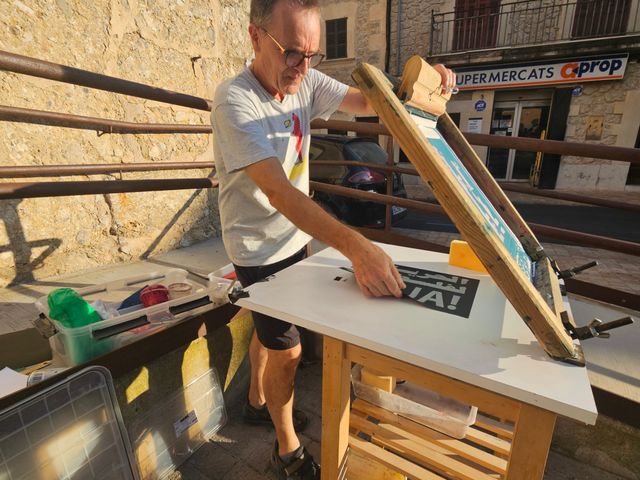
Retailers can also use early sales information to adjust replenishment decisions. If a new design attracts strong demand in particular sizes, production plans can be revised before committing to additional finished inventory.
Forecasting should remain practical rather than overly complicated. The goal is to understand which products require advance preparation, which can be produced after ordering, and where uncertainty makes large inventory commitments risky.
Print-on-Demand and Pre-Printed Inventory Require Different Strategies
Custom shirt printing retailers can fulfill orders through several production models. Some maintain finished products ready for immediate shipment, while others print garments after customers place orders. Many businesses use a combination of both approaches.
Pre-printed inventory can support faster fulfillment when demand is predictable. It may also improve production efficiency when several shirts with the same design can be printed together. However, it requires businesses to commit inventory to specific designs, sizes, and colors before knowing exactly what customers will purchase.
Print-on-demand reduces the need to hold finished printed stock, but it does not eliminate inventory requirements. Businesses may still need blank garments, printing materials, equipment capacity, and reliable access to supplies. Production lead times can also affect customer expectations.
A hybrid model may be useful for retailers with both established designs and experimental collections. Popular products can be prepared in advance, while less predictable designs are produced after orders arrive.
The appropriate strategy depends on demand patterns, production economics, delivery promises, and the retailer’s ability to replenish materials quickly.
Group Orders Add Another Layer of Inventory Complexity
Custom shirt printing businesses often serve schools, workplaces, sports teams, community organizations, and event planners. These customers may place orders containing dozens or hundreds of garments in different sizes.
Group orders can provide valuable demand visibility because customers frequently specify the required quantities before production begins. However, they also introduce operational challenges involving order accuracy, garment availability, and delivery deadlines.
A retailer may need to source uncommon sizes that are rarely requested through regular retail sales. If these garments have longer supplier lead times, the entire order schedule can be affected.
Clear order confirmation procedures are essential. Businesses should verify size quantities, artwork approvals, garment specifications, and deadlines before committing to production. Changes made after printing begins can create additional costs and inventory complications.
Group orders also offer useful forecasting information. Repeated orders from similar customer categories may reveal patterns in size distribution and preferred garment types. Retailers can use these insights to improve purchasing decisions without assuming every future group will require the same mix.
Supplier Lead Times Influence How Much Inventory Retailers Need
Inventory decisions depend partly on how quickly businesses can replenish stock. A retailer with reliable access to blank shirts may operate with lower inventory levels than one facing unpredictable supplier deliveries.
Lead times can vary by garment type, size, color, and order quantity. Common sizes may be readily available, while less frequently stocked variations could require additional sourcing time. These differences become important when customers expect rapid production.
Custom shirt printing businesses should monitor supplier performance and identify which products are most vulnerable to replenishment delays. Maintaining alternative sourcing options may provide flexibility, but differences in garment quality, fit, or color must be considered before substituting materials.
Safety stock should reflect both demand uncertainty and replenishment risk. Holding additional inventory for every variation can become expensive, while carrying too little of critical sizes may cause repeated order disruptions.
The objective is to understand where inventory provides genuine protection against delays and where it simply increases storage costs.
Connecting Inventory Planning With Printing Capacity
A retailer can have sufficient blank shirts and still struggle to fulfill orders if printing capacity is limited. Equipment availability, production setup, labor requirements, and order complexity all influence how quickly garments can be completed.
During busy periods, large orders may compete with individual customer purchases for production time. A retailer that accepts more orders than its printing operation can handle may experience delays even when inventory records show adequate stock.
Businesses should therefore connect inventory planning with production scheduling. Forecasting demand for popular designs is useful, but retailers also need to estimate how much printing work those orders will generate.
Batching similar designs or garment types may improve efficiency, depending on the printing process. However, large production batches can also increase finished inventory if demand does not materialize.
A balanced approach considers both material availability and operational capacity. Retailers should avoid treating stocked garments as immediately saleable finished products when additional production work is required.
Why Size-Level Sell-Through Reveals Hidden Inventory Problems
Sell-through measures the proportion of available merchandise sold during a defined period. For custom shirt printing retailers, examining sell-through at the size level can reveal problems that remain hidden in overall product performance.
A design may appear successful because most of its inventory has sold. However, closer analysis could show that popular sizes sold out quickly while less popular sizes remained unsold. The overall sell-through rate would not fully explain the missed sales opportunities.
Retailers should compare sales and remaining stock by design, size, and color. This helps identify whether inventory quantities match customer preferences or whether certain variations are consistently overrepresented.
Sell-through analysis is particularly useful when reviewing new collections. Early performance can indicate which combinations deserve replenishment and which should be reduced in future orders.
Businesses should also consider stockout periods when interpreting sales data. A size that sold fewer units may have experienced lower demand, or it may simply have been unavailable for much of the selling period. Accurate analysis requires distinguishing between these possibilities.
Managing Seasonal Demand and Short-Lived Designs
Custom apparel demand can change with holidays, school activities, community events, promotional campaigns, and seasonal fashion preferences. Some designs remain relevant for years, while others have a limited selling window.
Seasonal products create inventory risk because unsold finished shirts may lose much of their appeal after the relevant event or period ends. Retailers must decide how much stock to prepare without assuming that strong interest will continue indefinitely.
Historical sales can provide guidance for recurring seasonal products, but changes in customer preferences and marketing activity may influence demand. Businesses should review previous performance while accounting for differences in current conditions.
For designs with short selling windows, smaller production batches or order-based printing may reduce excess inventory. However, these approaches must be balanced against production lead times and customer delivery expectations.
Planning should also include an exit strategy for remaining stock. Businesses may be able to repurpose unprinted garments, but finished shirts with event-specific artwork can be difficult to sell once the occasion has passed.
Using Inventory Data to Make Better Purchasing Decisions
Custom shirt printing retailers often accumulate useful information through daily sales, customer inquiries, and production records. The challenge is turning that information into decisions about what to purchase, print, and replenish.
Useful measures include sales by size, stockout frequency, inventory turnover, supplier lead times, order completion times, and the amount of finished inventory remaining after promotional periods. These measures provide different perspectives on inventory performance.
A retailer might discover that certain blank shirt sizes are consistently used across several designs. This could justify maintaining a dependable supply of those garments. Another business may find that particular colors sell slowly regardless of the artwork printed on them, suggesting that future purchasing quantities should be reduced.
Inventory records should also distinguish between blank stock, work in progress, reserved garments, and finished products. Without these distinctions, businesses may overestimate how much inventory is actually available for new orders.
The objective is not to collect data for its own sake. Retailers should use information to identify recurring problems and make practical changes that improve product availability while controlling unnecessary inventory investment.
Custom Shirt Printing Needs a Balance Between Choice and Availability
Customers value customization because it allows them to select products that reflect their preferences, organizations, or events. Retailers naturally want to offer enough sizes, colors, and design options to meet these expectations.
However, unlimited choice creates operational complexity. Every additional variation may require more stock, more production planning, and greater attention to order accuracy. When assortment growth exceeds the business’s ability to manage inventory, customer choice can begin to undermine service reliability.
Businesses offering custom shirt printing services should consider which options provide meaningful customer value and which create unnecessary complexity. Popular garment colors and dependable size ranges may deserve priority, while unusual combinations can sometimes be handled through special orders.
Clear communication is also important. Customers should understand which products are immediately available, which require production time, and whether certain sizes or colors have longer lead times.
A manageable assortment does not mean offering limited creativity. It means designing the product range around realistic demand and operational capability so that customers can receive the garments they actually want.
Better Size Decisions Lead to Stronger Retail Performance
Custom shirt printing demonstrates why retail inventory management cannot be reduced to counting products on shelves. Every size, color, design, and garment type creates a separate demand and availability challenge. A business may have substantial inventory while still struggling to complete orders because the wrong combinations are in stock.
Strong inventory planning begins with understanding size-level demand, distinguishing blank garments from finished products, and selecting production methods that match customer purchasing patterns. Retailers also need to account for supplier lead times, printing capacity, seasonal demand, and the operational complexity of group orders.
The goal is not to eliminate every stockout or avoid holding inventory altogether. It is to make deliberate decisions about where stock is most valuable and where flexibility can reduce unnecessary risk.
When custom shirt printing businesses treat every size as a stock decision, they gain a clearer understanding of what customers actually need. That understanding supports better purchasing, fewer avoidable delays, more efficient production, and a retail operation that can offer personalization without allowing inventory complexity to consume its margins.
Leave a Reply